Though I May Fall I Will Rise Again
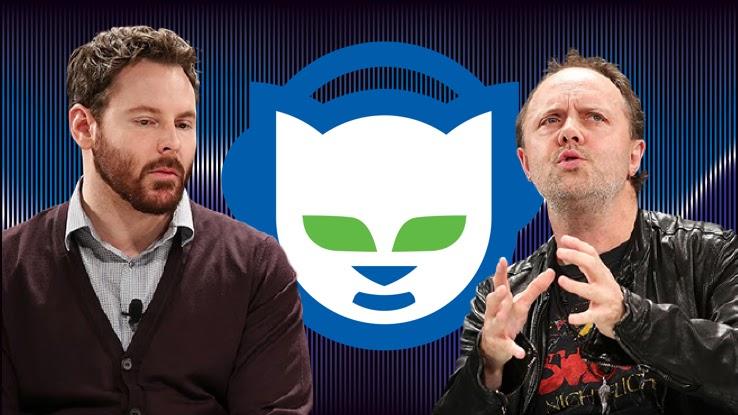
As you read this, there's a practiced take a chance you're enjoying some amazing tunes through an online streaming service like Spotify, Pandora or Apple Music. Or perchance you prefer keeping things a little flake onetime-schoolhouse with your trusty iPod and — gear up for it? — headphones that actually accept wires. No thing what your favorite way to melody in might exist, it's safety to say the mode nosotros heed to music, not to mention the music manufacture itself, has evolved drastically in the last couple of decades. Many people credit this musical revolution to the peer-to-peer (P2P) file-sharing software program Napster.
Only Napster's appeal to everyday listeners — namely the ability to expand their music libraries without having to pay to access that new music — was also responsible for its downfall. After facing costly lawsuits from irate executives and artists, Napster shut downwards its servers in July of 2001. As we approach the 2-decade marking since Napster'south demise, we're taking a look back at the rise and fall of ane of the most controversial web-based applications in internet history, from its origins to the fashion information technology changed the music industry forever.
The Rise of Napster: What Led to the Digital Sound Formats of Today?
Earlier we dive into exactly what Napster was, it helps to take a look at the dissimilar ways music storage was fabricated commercially bachelor to u.s.a. — and how these audio formats evolved. Starting in the 1800s, if people wanted to ain music, they purchased large discs made from hard rubber or shellac that were stamped with grooves to create vibrations that played songs. These were some of the earliest records people had access to. In the 1940s, manufacturers started making the discs from polyvinyl chloride, giving ascension to the term "vinyl" in reference to tape albums.
Past the mid-1960s, electronics companies had figured out how to shop music on magnetic tape spooled in plastic housings. Known as viii-track tapes, they enjoyed widespread utilize earlier slimming downward to smaller cassette tapes in the 1980s. And these analog methods of playing music became near-extinct when compact discs (CDs) invaded record stores everywhere. After dominating the market as the music-storage format of choice for several decades, still, CDs, too, were eventually eclipsed. A new innovation was on the horizon — and we weren't going to need concrete storage methods like records, cassette tapes or CDs to access our favorite songs anymore.
When personal computers began to see more than widespread use in the late 1980s and early 1990s, programmers developed methods of storing sound digitally to provide the audio on their software programs. Music industry executives also saw dollar signs in the decision to produce CD-ROMs that contained songs stored as digital Waveform Audio Files (WAV) on these discs. As with any technological advancement, users found ways to copy WAV files from their CDs and shop those files on their computers. This meant someone could buy an anthology on CD, re-create the music to their estimator and store it on the same device.
And this also meant people could share that music with family and friends. Like copying a cassette tape, the premise of making copies of songs or creating playlists to give to our high school love interests wasn't exactly something new. But in the late 1990s, music sharing was set to go global when programmers Shawn Fanning and Sean Parker created an application to share digital vocal files amid millions of users.
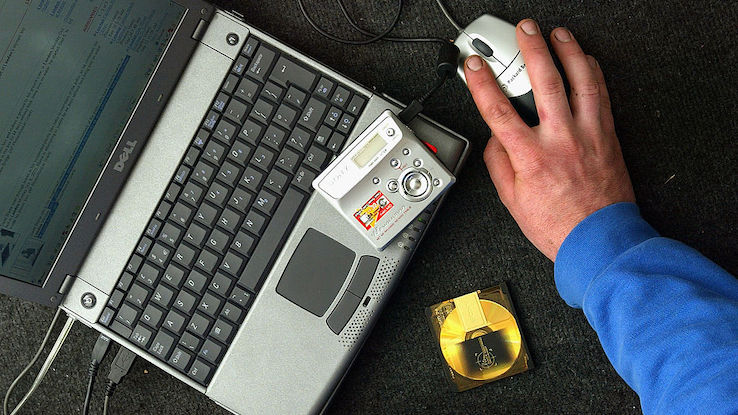
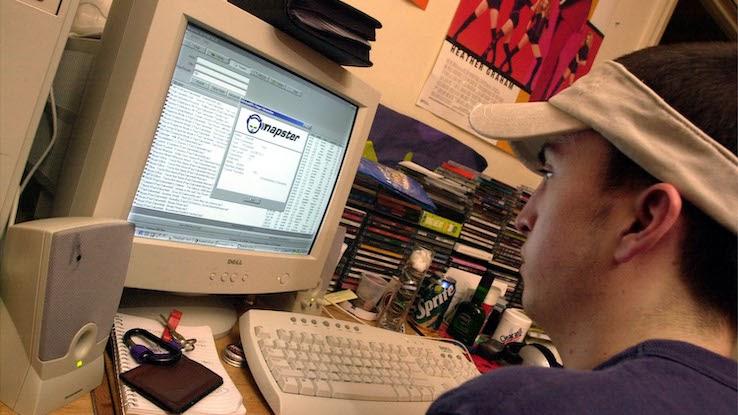
Napster essentially pioneered P2P file-sharing clients. But what exactly does that mean? Users "ripped" WAV files from CDs, pregnant they copied the digital sound files from CDs to programs on their computers and condensed that digital information into smaller files — what we now know as MP3s — that were more suitable for fast downloading. They so uploaded these MP3 files to Napster'south service, saving the files with the music artist's name and the song title. By downloading Napster, users essentially joined a network that gave them admission to the file libraries of everyone else who was also using Napster.
A user could operate Napster's search office to look for a track name or artist, and the file names popped up in search results. Later on a quick double-click and a few minutes, the file downloaded to the user's computer, where they could and then transfer it to a portable media player like an iPod. The more people who downloaded the MP3, the faster the file downloaded — and the farther it spread to new users without people having to purchase the bodily albums the songs were officially available on.
Once someone had downloaded music files for complimentary, they were able to do what they wanted with those files — technically speaking, but perchance non ethically and then. And record labels and artists weren't able to contain this widespread, illicit distribution of music, so they weren't able to profit from information technology the way they expected to. Thus began the back-and-forth battle betwixt record labels, artists and consumers on the ethics and legality of P2P file sharing.
Napster Vicious Just as Quickly as It Rose
At its peak, Napster had near 80 one thousand thousand registered users — a surprising number considering that the service was only operational from June 1999 to July 2001. And this massive popularity also quickly raised the ire of music manufacture professionals who were concerned virtually the loss of profits and uncontrolled distribution of their intellectual property.
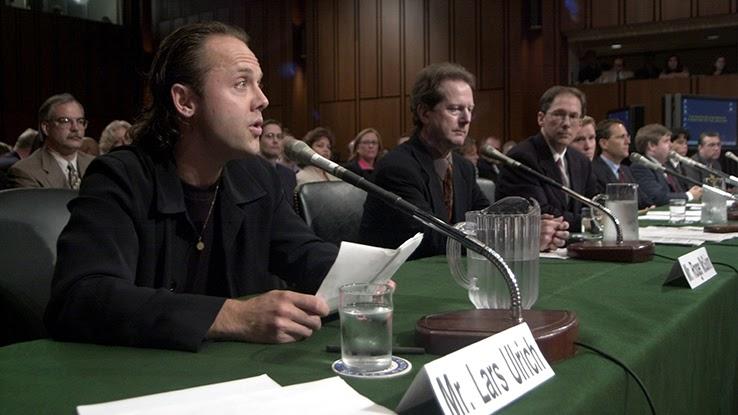
In 2000, Metallica sued Napster and a few colleges, including USC, Yale and Indiana University, for encouraging students to copy songs. Drummer Lars Ulrich wasn't shy with his criticisms of the service, proverb, "It is sickening to know that our art is beingness traded like a commodity rather than the art that information technology is." Even after facing violent backlash from fans who thought the decision was purely financial, Ulrich's opinion didn't waver. In a 2014 Reddit AMA, he wrote, "The whole thing was about ane thing and 1 affair only — control… If I wanna give my s*** away for complimentary, I'll give it abroad for gratuitous. That option was taken abroad from me." Ulrich also appeared before Congress, accusing Napster of copyright infringement and testifying about its potential damages.
Dr. Dre, hip-hop pioneer and founder of Death Row Records, lost money as both an artist and a producer due to file-sharing on Napster. He filed a lawsuit in 2000 against Napster while leaving open up the possibility of suing individual users. In a argument, Dr. Dre'south chaser Howard King was edgeless: "If it turns out that there are people who have huge hard drives and really are downloading copyrighted materials and transmitting [them] on the internet, we may very well become after them considering they are engaged in theft."
Napster somewhen reached settlements with diverse artists, record labels and the Recording Industry Association of America and was ordered past a federal gauge to cake music from any artist who didn't want information technology to be shared on the service. As a event of the litigation, Napster shut downwardly its servers on July xi, 2001, and tried to transform into a paid service that never caught on.
Not All Artists Protested the Service
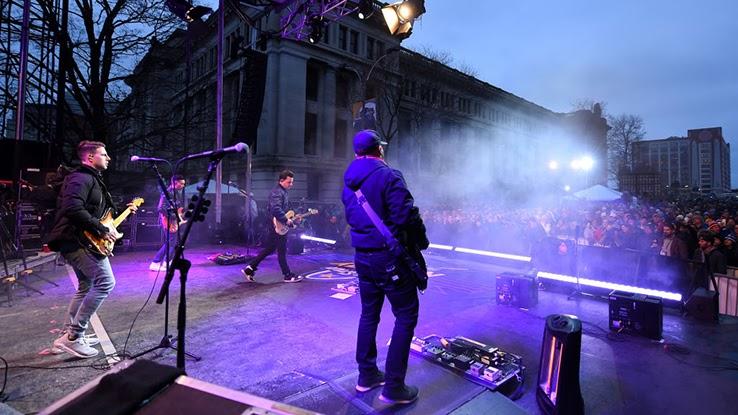
Perhaps surprisingly, some music artists have cited Napster every bit a catalyst for their popularity, not a detractor, because it immune many more people to discover their music. The folk/stone ring Of A Revolution (O.A.R) became a nationwide success on college campuses with the vocal "Crazy Game of Poker." The reason? "Napster led to what we can do today," drummer Chris Culos told the Annoy Herald. "One time people plant out virtually the ring [via Napster], they went dorsum and supported us by ownership records, coming to shows, or passing it on to their friends. In our example, Napster was huge."
Several artists were thrilled at the innovative method Napster presented for reaching much broader audiences. Chris Cornell of bands Soundgarden and Audioslave said, "I call back this aspect of technology is really going to bring a lot of dissimilar angles of life and commerciality out of the corporate earth and give information technology back to the individuals." According to AV Social club, Napster was also responsible for turning Radiohead into "global superstars." The English band had never had a elevation-xx hitting in the U.S., but later their 2000 album Kid A made its way to Napster three months before its release appointment, millions of people began downloading it — and Kid Adebuted at the number-ane spot on the Billboard 200 sales nautical chart.
The value of Napster equally a potential promotional tool became part of its appeal in an increasingly divided industry. Fifty-fifty artists similar David Bowie, Billy Corgan and Limp Bizkit happily adapted to the new method for sharing music beyond the globe. Napster represented an exciting new fashion for artists to reach fans, even if other established artists — and federal courts — didn't share the sentiment.
The Finish of an Era: Napster's Rebirth and Accommodation Fizzle Out With Fans
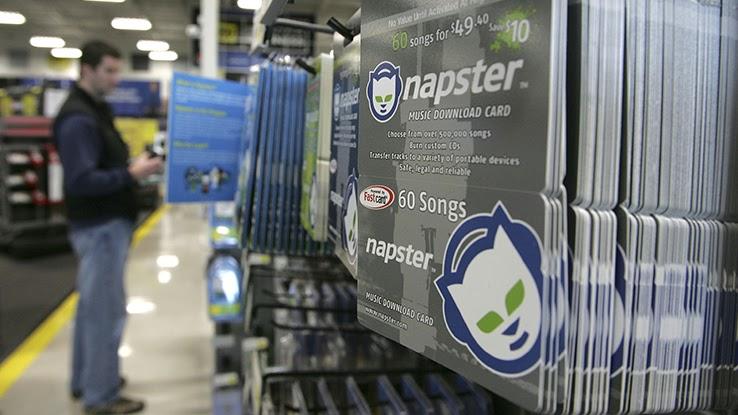
Software company Roxio, which creates programs for called-for CDs and DVDs, purchased Napster'due south brand and logos in a bankruptcy auction before long after the shutdown in an endeavor to re-brand another music service it bought, Pressplay, as Napster two.0 — a paid version. Napster so changed hands over again following electronics giant All-time Buy's purchase of the service before transferring once more to Rhapsody, 1 of the first streaming services to offer the monthly-subscription format that leaders similar Spotify and Apple Music at present follow.
In August 2020, Napster was again sold — this fourth dimension to MelodyVR, a virtual reality concert platform. Throughout all these transformations and corporate transactions, users jumped transport, non knowing how the platform would alter once more with each new sale or rebrand. Today, nigh 3 million people use Napster — a far autumn from the eighty million users the service saw at its new-millennium height.
Although the music industry won the battle against Napster, the war to cease costless digital music sharing continues. BitTorrent, a similar P2P sharing platform, is now the most mutual method for sharing music, movies, books, computer software and other digital files. More than 170 million users are agile on this platform, despite cyberspace service providers' frequent attempted crackdowns on users who break copyright infringement laws.
Today, many artists produce their music on dwelling house studio computers, host cocky-booked tours and promote themselves on social media, funding success without the backing of big record labels. Napster's democratization of music potentially sparked the motility that freed artists to become independent of record labels in ways they couldn't take anticipated 30 years agone.
Other aspects of Napster may have been far ahead of their time, likewise. Remember those pesky digital files that led to Napster's downfall? Many of today's artists include gratis downloads of their albums with a vinyl tape buy, eliminating the need to download songs illegally to obtain digital copies. As The Smashing Pumpkins' Billy Corgan stated early on, "This revolution has already taken place" — but the music industry is undergoing continual revolutions even today. And Napster deserves credit for taking the risks that ultimately spurred this digital revolution.
crawfordhinfife1965.blogspot.com
Source: https://www.ask.com/culture/napster-20-years-later?utm_content=params%3Ao%3D740004%26ad%3DdirN%26qo%3DserpIndex
0 Response to "Though I May Fall I Will Rise Again"
Postar um comentário