Part (a) What Is the Mass (in Kg) of the Child and Basket if a Scale Reading of 54 N Is Observed?
| Torso mass index (BMI) | |
|---|---|
 Chart showing body mass alphabetize (BMI) for a range of heights and weights in both metric and imperial. Colours indicate BMI categories divers by the World Wellness Organisation; underweight, normal weight, overweight, moderately obese, severely obese and very severely obese. | |
| Synonyms | Quetelet index |
| MeSH | D015992 |
| MedlinePlus | 007196 |
| LOINC | 39156-5 |
Body mass alphabetize (BMI) is a value derived from the mass (weight) and height of a person. The BMI is defined every bit the body mass divided by the square of the torso height, and is expressed in units of kg/m2, resulting from mass in kilograms and elevation in metres.
The BMI may be determined using a tabular array[a] or chart which displays BMI as a part of mass and summit using contour lines or colours for different BMI categories, and which may use other units of measurement (converted to metric units for the calculation).[b]
The BMI is a user-friendly rule of thumb used to broadly categorize a person every bit underweight, normal weight, overweight, or obese based on tissue mass (muscle, fatty, and bone) and height. Major adult BMI classifications are underweight (under 18.v kg/1000ii), normal weight (18.five to 24.ix), overweight (25 to 29.ix), and obese (thirty or more).[ane] When used to predict an individual's wellness, rather than equally a statistical measurement for groups, the BMI has limitations that can make information technology less useful than some of the alternatives, peculiarly when applied to individuals with abdominal obesity, short stature, or unusually high musculus mass.
BMIs nether 20 and over 25 have been associated with higher all-causes bloodshed, with the risk increasing with distance from the 20–25 range.[2]
History [edit]

Adolphe Quetelet, a Belgian astronomer, mathematician, statistician, and sociologist, devised the footing of the BMI between 1830 and 1850 as he developed what he called "social physics".[3] The modernistic term "torso mass alphabetize" (BMI) for the ratio of human trunk weight to squared height was coined in a newspaper published in the July 1972 edition of the Periodical of Chronic Diseases by Ancel Keys and others. In this newspaper, Keys argued that what he termed the BMI was "if not fully satisfactory, at least as adept as any other relative weight index equally an indicator of relative obesity".[4] [5] [6]
The interest in an alphabetize that measures torso fat came with observed increasing obesity in prosperous Western societies. Keys explicitly judged BMI every bit appropriate for population studies and inappropriate for private evaluation. Nevertheless, due to its simplicity, information technology has come up to exist widely used for preliminary diagnoses.[vii] Additional metrics, such equally waist circumference, can be more useful.[viii]
The BMI is expressed in kg/gtwo, resulting from mass in kilograms and height in metres. If pounds and inches are used, a conversion factor of 703 (kg/grand2)/(lb/in2) is applied. When the term BMI is used informally, the units are commonly omitted.

BMI provides a simple numeric measure of a person's thickness or thinness, allowing health professionals to discuss weight problems more considerately with their patients. BMI was designed to be used as a unproblematic means of classifying average sedentary (physically inactive) populations, with an average body limerick.[nine] For such individuals, the BMI value recommendations every bit of 2014[update] are as follows: xviii.five to 24.9 kg/yard2 may indicate optimal weight, lower than 18.5 may indicate underweight, 25 to 29.ix may indicate overweight, and 30 or more may bespeak obese.[7] [viii] Lean male person athletes often have a high muscle-to-fat ratio and therefore a BMI that is misleadingly high relative to their body-fat per centum.[8]
Categories [edit]
A mutual use of the BMI is to assess how far an individual'south body weight departs from what is normal for a person'due south height. The weight backlog or deficiency may, in function, be accounted for past body fat (adipose tissue) although other factors such equally muscularity also touch BMI significantly (run into discussion below and overweight).[10]
The WHO regards an adult BMI of less than 18.5 every bit underweight and may indicate malnutrition, an eating disorder, or other health problems, while a BMI equal to or greater than 25 is considered overweight and 30 or more is considered obese.[i] In addition to the principle, international WHO BMI cut-off points (16, 17, 18.5, 25, 30, 35 and xl), four boosted cut-off points for at-run a risk Asians were identified (23, 27.five, 32.5 and 37.v).[11] These ranges of BMI values are valid but equally statistical categories.
Children (aged 2 to 20) [edit]

BMI for age percentiles for boys 2 to twenty years of age
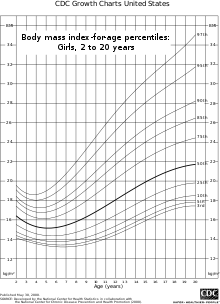
BMI for age percentiles for girls ii to twenty years of age
BMI is used differently for children. It is calculated in the aforementioned way as for adults but then compared to typical values for other children of the same age. Instead of comparison against fixed thresholds for underweight and overweight, the BMI is compared confronting the percentiles for children of the aforementioned sex activity and age.[12]
A BMI that is less than the 5th percentile is considered underweight and above the 95th percentile is considered obese. Children with a BMI betwixt the 85th and 95th percentile are considered to be overweight.[thirteen]
Studies in Uk from 2013 have indicated that females between the ages 12 and 16 had a higher BMI than males of the same age by ane.0 kg/thou2 on boilerplate.[14]
International variations [edit]
These recommended distinctions along the linear scale may vary from time to fourth dimension and country to land, making global, longitudinal surveys problematic. People from dissimilar populations and descent have different associations between BMI, percentage of torso fatty, and wellness risks, with a higher risk of type 2 diabetes mellitus and atherosclerotic cardiovascular affliction at BMIs lower than the WHO cut-off point for overweight, 25 kg/mii, although the cut-off for observed risk varies among dissimilar populations. The cutting-off for observed risk varies based on populations and subpopulations in Europe, Asia and Africa.[15] [16]
Hong Kong [edit]
The Hospital Authorisation of Hong Kong recommends the use of the following BMI ranges:[17]
Japan [edit]
A 2000 report from the Nihon Society for the Written report of Obesity (JASSO) presents the post-obit table of BMI categories:[18] [19] [20]
Singapore [edit]
In Singapore, the BMI cut-off figures were revised in 2005 by the Wellness Promotion Lath (HPB), motivated by studies showing that many Asian populations, including Singaporeans, have a college proportion of torso fatty and increased chance for cardiovascular diseases and diabetes mellitus, compared with general BMI recommendations in other countries. The BMI cut-offs are presented with an emphasis on health risk rather than weight.[21]
United states [edit]
In 1998, the U.S. National Institutes of Health and the Centers for Disease Control and Prevention brought U.Southward. definitions in line with World Health Organization guidelines, lowering the normal/overweight cutting-off from BMI 27.8 to BMI 25. This had the issue of redefining approximately 29 meg Americans, previously healthy, to overweight.[22]
This can partially explain the increase in the overweight diagnosis in the past twenty years, and the increase in sales of weight loss products during the same time. WHO also recommends lowering the normal/overweight threshold for southeast Asian torso types to effectually BMI 23, and expects further revisions to emerge from clinical studies of different body types.[23]
A survey in 2007 showed 63% of Americans were then overweight or obese, with 26% in the obese category (a BMI of 30 or more). By 2014, 37.7% of adults in the United States were obese, 35.0% of men and 40.iv% of women; class 3 obesity (BMI over 40) values were 7.7% for men and 9.9% for women.[24] The U.S. National Health and Diet Test Survey of 2015-2016 showed that 71.vi% of American men and women had BMIs over 25.[25] Obesity—a BMI of 30 or more—was found in 39.eight% of the The states adults.
Consequences of elevated level in adults [edit]
The BMI ranges are based on the human relationship betwixt body weight and disease and death.[27] Overweight and obese individuals are at an increased risk for the post-obit diseases:[28]
- Coronary avenue illness
- Dyslipidemia
- Type ii diabetes
- Gallbladder disease
- Hypertension
- Osteoarthritis
- Sleep apnea
- Stroke
- Infertility
- At to the lowest degree 10 cancers, including endometrial, breast, and colon cancer[29]
- Epidural lipomatosis[30]
Among people who have never smoked, overweight/obesity is associated with 51% increase in bloodshed compared with people who have always been a normal weight.[31]
Applications [edit]
Public health [edit]
The BMI is by and large used as a means of correlation between groups related past general mass and can serve as a vague means of estimating adiposity. The duality of the BMI is that, while information technology is easy to apply as a full general calculation, it is express as to how accurate and pertinent the data obtained from it can be. Generally, the alphabetize is suitable for recognizing trends inside sedentary or overweight individuals because there is a smaller margin of error.[32] The BMI has been used by the WHO as the standard for recording obesity statistics since the early 1980s.
This full general correlation is particularly useful for consensus data regarding obesity or diverse other conditions because information technology can be used to build a semi-accurate representation from which a solution can be stipulated, or the RDA for a grouping can exist calculated. Similarly, this is becoming more than and more than pertinent to the growth of children, since the bulk of children are sedentary.[33] Cross-sectional studies indicated that sedentary people tin decrease BMI past becoming more physically active. Smaller effects are seen in prospective cohort studies which lend to support active mobility as a means to prevent a further increase in BMI.[34]
Clinical practise [edit]
BMI categories are generally regarded equally a satisfactory tool for measuring whether sedentary individuals are underweight, overweight, or obese with various exceptions, such as athletes, children, the elderly, and the infirm.[ medical commendation needed ] Also, the growth of a child is documented against a BMI-measured growth chart. Obesity trends can then be calculated from the divergence betwixt the child's BMI and the BMI on the chart.[ medical citation needed ] In the Usa, BMI is also used as a measure of underweight, owing to advocacy on behalf of those with eating disorders, such equally anorexia nervosa and bulimia nervosa.[ medical citation needed ]
Legislation [edit]
In France, Italy, and Kingdom of spain, legislation has been introduced banning the usage of fashion show models having a BMI below 18.[35] In State of israel, a BMI below 18.5 is banned.[36] This is done to fight anorexia among models and people interested in fashion.
Relationship to health [edit]
A report published by Journal of the American Medical Association (JAMA) in 2005 showed that overweight people had a expiry rate similar to normal weight people as divers by BMI, while underweight and obese people had a higher expiry rate.[37]
A study published past The Lancet in 2009 involving 900,000 adults showed that overweight and underweight people both had a mortality rate college than normal weight people as defined by BMI. The optimal BMI was found to exist in the range of 22.5–25.[38] The average BMI of athletes is 22.4 for women and 23.6 for men.[39]
High BMI is associated with blazon 2 diabetes only in persons with loftier serum gamma-glutamyl transpeptidase.[40]
In an analysis of forty studies involving 250,000 people, patients with coronary artery disease with normal BMIs were at higher risk of death from cardiovascular affliction than people whose BMIs put them in the overweight range (BMI 25–29.9).[41]
One study found that BMI had a good general correlation with torso fatty percentage, and noted that obesity has overtaken smoking as the world's number i cause of death. But it also notes that in the study l% of men and 62% of women were obese according to torso fat defined obesity, while just 21% of men and 31% of women were obese according to BMI, meaning that BMI was plant to underestimate the number of obese subjects.[42]
A 2010 study that followed 11,000 subjects for up to eight years concluded that BMI is not a good measure for the risk of center attack, stroke or death. A better measure was found to exist the waist-to-height ratio.[43] A 2011 study that followed lx,000 participants for upwardly to xiii years found that waist–hip ratio was a better predictor of ischaemic heart disease mortality.[44]
Limitations [edit]

This graph shows the correlation between body mass index (BMI) and body fatty percentage (BFP) for 8550 men in NCHS' NHANES 1994 data. Data in the upper left and lower right quadrants suggest the limitations of BMI.[42]
The medical establishment[45] and statistical customs[46] have both highlighted the limitations of BMI.
Scaling [edit]
The exponent in the denominator of the formula for BMI is arbitrary. The BMI depends upon weight and the foursquare of height. Since mass increases to the third power of linear dimensions, taller individuals with exactly the same trunk shape and relative composition have a larger BMI.[47] BMI is proportional to the mass and inversely proportional to the square of the height. So, if all body dimensions double, and mass scales naturally with the cube of the acme, and so BMI doubles instead of remaining the same. This results in taller people having a reported BMI that is uncharacteristically high, compared to their actual body fatty levels. In comparing, the Ponderal alphabetize is based on the natural scaling of mass with the third power of the height.[48]
Notwithstanding, many taller people are not just "scaled up" brusk people but tend to have narrower frames in proportion to their tiptop.[49] Carl Lavie has written that "The B.Grand.I. tables are splendid for identifying obesity and body fat in large populations, just they are far less reliable for determining fatness in individuals."[50]
Co-ordinate to mathematician Nick Trefethen, "BMI divides the weight by too large a number for brusque people and as well small a number for tall people. So short people are misled into thinking that they are thinner than they are, and alpine people are misled into thinking they are fatter."[51]
For United states adults, exponent estimates range from ane.92 to 1.96 for males and from ane.45 to 1.95 for females.[52] [53]
Physical characteristics [edit]
The BMI overestimates roughly x% for a large (or tall) frame and underestimates roughly 10% for a smaller frame (short stature). In other words, persons with small frames would be carrying more fat than optimal, but their BMI indicates that they are normal. Conversely, large framed (or tall) individuals may be quite healthy, with a fairly low trunk fat percentage, but be classified as overweight by BMI.[54]
For example, a pinnacle/weight chart may say the ideal weight (BMI 21.5) for a 1.78-metre-tall (5 ft ten in) human is 68 kilograms (150 lb). Simply if that human being has a slender build (pocket-sized frame), he may exist overweight at 68 kg or 150 lb and should reduce by x% to roughly 61 kg or 135 lb (BMI nineteen.4). In the contrary, the man with a larger frame and more than solid build should increase by 10%, to roughly 75 kg or 165 lb (BMI 23.7). If 1 teeters on the edge of modest/medium or medium/large, mutual sense should be used in computing one'due south platonic weight. However, falling into one's ideal weight range for height and build is still not as accurate in determining health risk factors equally waist-to-superlative ratio and actual body fat percentage.[55]
Accurate frame size calculators use several measurements (wrist circumference, elbow width, neck circumference, and others) to determine what category an individual falls into for a given top.[56] The BMI likewise fails to take into business relationship loss of top through ageing. In this situation, BMI will increment without whatsoever corresponding increase in weight.
Proposed new BMI [edit]
A new formula for computing Body Mass Index that accounts for the distortions of the traditional BMI formula for shorter and taller individuals has been proposed by Nick Trefethen, Professor of numerical analysis at the Academy of Oxford:[57]
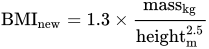
The scaling factor of 1.3 was determined to brand the proposed new BMI formula align with the traditional BMI formula for adults of boilerplate height, while the exponent of two.5 is a compromise betwixt the exponent of ii in the traditional formula for BMI and the exponent of 3 that would exist expected for the scaling of weight (which at constant density would theoretically scale with volume, i.e., equally the cube of the pinnacle) with height; nonetheless, in Trefethen'south assay, an exponent of ii.5 was found to fit empirical information more closely with less baloney than either an exponent of 2 or 3.
Muscle versus fatty [edit]
Assumptions virtually the distribution between muscle mass and fat mass are inexact. BMI generally overestimates adiposity on those with more lean trunk mass (east.one thousand., athletes) and underestimates excess adiposity on those with less lean body mass.
A study in June 2008 by Romero-Corral et al. examined 13,601 subjects from the Usa' third National Health and Nutrition Examination Survey (NHANES III) and found that BMI-defined obesity (BMI ≥ 30) was nowadays in 21% of men and 31% of women. Torso fatty-defined obesity was found in 50% of men and 62% of women. While BMI-defined obesity showed high specificity (95% for men and 99% for women), BMI showed poor sensitivity (36% for men and 49% for women). In other words, the BMI will be mostly right when determining a person to be obese, but tin err quite ofttimes when determining a person not to exist. Despite this undercounting of obesity by BMI, BMI values in the intermediate BMI range of 20–thirty were plant to be associated with a wide range of body fat percentages. For men with a BMI of 25, about xx% accept a trunk fat percentage beneath 20% and about 10% have torso fat percentage higher up thirty%.[42]
Body composition for athletes is often better calculated using measures of body fat, equally determined by such techniques equally skinfold measurements or underwater weighing and the limitations of manual measurement have also led to new, alternative methods to measure obesity, such as the body book indicator.[ commendation needed ]
Variation in definitions of categories [edit]
Information technology is non articulate where on the BMI scale the threshold for overweight and obese should be set. Because of this, the standards have varied over the past few decades. Between 1980 and 2000 the U.Southward. Dietary Guidelines have defined overweight at a diversity of levels ranging from a BMI of 24.9 to 27.i. In 1985 the National Institutes of Health (NIH) consensus conference recommended that overweight BMI be ready at a BMI of 27.8 for men and 27.iii for women.
In 1998, an NIH report concluded that a BMI over 25 is overweight and a BMI over 30 is obese.[22] In the 1990s the World Health Organization (WHO) decided that a BMI of 25 to 30 should be considered overweight and a BMI over 30 is obese, the standards the NIH set up. This became the definitive guide for determining if someone is overweight.
The current WHO and NIH ranges of normal weights are proved to exist associated with decreased risks of some diseases such as diabetes type Two; still using the same range of BMI for men and women is considered arbitrary and makes the definition of underweight quite unsuitable for men.[58]
I study found that the vast majority of people labelled 'overweight' and 'obese' according to current definitions practise not in fact confront any meaningful increased risk for early death. In a quantitative assay of several studies, involving more 600,000 men and women, the lowest mortality rates were found for people with BMIs between 23 and 29; virtually of the 25–30 range considered 'overweight' was non associated with higher risk.[59]
Alternatives [edit]
BMI prime [edit]
BMI Prime, a modification of the BMI organisation, is the ratio of actual BMI to upper limit optimal BMI (currently defined at 25 kg/mii), i.e., the actual BMI expressed as a proportion of upper limit optimal. The ratio of actual body weight to body weight for upper limit optimal BMI (25 kg/m2) is equal to BMI Prime. BMI Prime is a dimensionless number contained of units. Individuals with BMI Prime number less than 0.74 are underweight; those with between 0.74 and ane.00 have optimal weight; and those at 1.00 or greater are overweight. BMI Prime is useful clinically because it shows by what ratio (e.yard. one.36) or percentage (east.grand. 136%, or 36% to a higher place) a person deviates from the maximum optimal BMI.
For case, a person with BMI 34 kg/m2 has a BMI Prime of 34/25 = 1.36, and is 36% over their upper mass limit. In Due south Eastward Asian and South Chinese populations (see § international variations), BMI Prime number should be calculated using an upper limit BMI of 23 in the denominator instead of 25. BMI Prime allows easy comparison between populations whose upper-limit optimal BMI values differ.[sixty]
Waist circumference [edit]
Waist circumference is a practiced indicator of visceral fat, which poses more wellness risks than fat elsewhere. According to the U.Southward. National Institutes of Health (NIH), waist circumference in excess of 1,020 mm (twoscore in) for men and 880 mm (35 in) for (non-meaning) women is considered to imply a high risk for type 2 diabetes, dyslipidemia, hypertension, and CVD. Waist circumference can be a meliorate indicator of obesity-related illness hazard than BMI. For example, this is the case in populations of Asian descent and older people.[61] 940 mm (37 in) for men and 800 mm (31 in) for women has been stated to pose "college take a chance", with the NIH figures "fifty-fifty higher".[62]
Waist-to-hip circumference ratio has also been used, but has been found to exist no better than waist circumference alone, and more complicated to measure.[63]
A related indicator is waist circumference divided by height. The values indicating increased risk are: greater than 0.v for people under xl years of age, 0.five to 0.6 for people aged 40–50, and greater than 0.half-dozen for people over 50 years of age.[64]
Surface-based torso shape alphabetize [edit]
The Surface-based Body Shape Index (SBSI) is far more rigorous and is based upon four fundamental measurements: the body area (BSA), vertical trunk circumference (VTC), waist circumference (WC) and height (H). Data on eleven,808 subjects from the National Health and Human Diet Examination Surveys (NHANES) 1999–2004, showed that SBSI outperformed BMI, waist circumference, and A Body Shape Index (ABSI), an alternative to BMI.[65] [66]
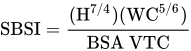
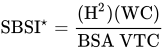
A simplified, dimensionless form of SBSI, known as SBSI*, has as well been adult.[66]
Modified trunk mass index [edit]
Within some medical contexts, such as familial amyloid polyneuropathy, serum albumin is factored in to produce a modified body mass alphabetize (mBMI). The mBMI tin can be obtained past multiplying the BMI by serum albumin, in grams per litre. [67]
See likewise [edit]
- Allometry
- Relative Fat Mass (RFM)
- Torso water
- Corpulence alphabetize
- History of anthropometry
- List of countries by body mass index
- Obesity paradox
- Somatotype and ramble psychology
Notes [edit]
- ^ e.yard., the "Torso Mass Index Table". National Institutes of Health's NHLBI. Archived from the original on 2010-03-x.
- ^ For instance, in the UK where people oftentimes know their weight in stone and summit in feet and inches – see "Calculate your body mass alphabetize". 30 August 2006. Retrieved 2019-12-xi .
- ^ a b c d e Afterward rounding.
References [edit]
- ^ a b The SuRF Written report ii (PDF). The Surveillance of Risk Factors Study Series (SuRF). World Health Organization. 2005. p. 22.
- ^ Di Angelantonio E, Bhupathiraju S, Wormser D, Gao P, Kaptoge S, Berrington de Gonzalez A, et al. (Baronial 2016). "Body-mass index and all-cause bloodshed: individual-participant-data meta-analysis of 239 prospective studies in 4 continents". Lancet. 388 (10046): 776–86. doi:10.1016/S0140-6736(16)30175-1. PMC4995441. PMID 27423262.
- ^ Eknoyan G (Jan 2008). "Adolphe Quetelet (1796–1874)--the average man and indices of obesity". Nephrology, Dialysis, Transplantation. 23 (1): 47–51. doi:10.1093/ndt/gfm517. PMID 17890752.
- ^ Blackburn H, Jacobs D (June 2014). "Commentary: Origins and development of torso mass alphabetize (BMI): continuing saga" (PDF). International Journal of Epidemiology. 43 (3): 665–669. doi:x.1093/ije/dyu061. PMID 24691955.
- ^ Singer-Vine J (July 20, 2009). "Beyond BMI: Why doctors won't stop using an outdated measure for obesity". Slate. Archived from the original on vii September 2011. Retrieved 15 Dec 2013.
- ^ Keys A, Fidanza F, Karvonen MJ, Kimura N, Taylor HL (July 1972). "Indices of relative weight and obesity". Journal of Chronic Diseases. 25 (6): 329–343. doi:10.1016/0021-9681(72)90027-6. PMID 4650929.
- ^ a b "Assessing Your Weight and Health Risk". National Heart, Lung and Claret Plant. Archived from the original on 19 Dec 2014. Retrieved 19 December 2014.
- ^ a b c "Defining obesity". NHS. Archived from the original on 18 December 2014. Retrieved nineteen Dec 2014.
- ^ "Physical status: the apply and estimation of anthropometry. Report of a WHO Adept Commission" (PDF). Earth Health Organization Technical Study Series. 854: 1–452. 1995. PMID 8594834. Archived (PDF) from the original on 2007-02-ten.
- ^ "About Adult BMI | Healthy Weight | CDC". www.cdc.gov. 2017-08-29. Retrieved 2018-01-26 .
- ^ Earth Health Organization 2005, pp. 21–22.
- ^ "Body Mass Alphabetize: BMI for Children and Teens". Eye for Affliction Control. Archived from the original on 2013-10-29. Retrieved 2013-12-16 .
- ^ Wang Y (2012). "Chapter 2: Use of Percentiles and Z-Scores in Anthropometry". Handbook of Anthropometry. New York: Springer. p. 29. ISBN978-i-4419-1787-iv.
- ^ "Health Survey for England: The Health of Children and Young People". Archive2.official-documents.co.britain. Archived from the original on 2012-06-25. Retrieved 16 Dec 2013.
- ^ Ogunlade O, Adalumo OA, Asafa MA (2015). "Challenges of trunk mass index classification: New criteria for young developed Nigerians". Niger J Health Sci. 15 (xv:71–four): 71. doi:10.4103/1596-4078.182319. S2CID 132117809.
- ^ WHO Skilful Consultation (January 2004). "Advisable body-mass index for Asian populations and its implications for policy and intervention strategies". Lancet. 363 (9403): 157–163. doi:x.1016/S0140-6736(03)15268-three. PMID 14726171. S2CID 15637224.
- ^ "Body weight chart – ideal goal weight chart". Fitness of Torso – Health & Wellness site.
- ^ "肥満って、 どんな状態?" [What is obesity, what kind of country?]. Obesity Homepage (in Japanese). Ministry building of Health, Labor and Welfare. Archived from the original on 2013-06-28. Retrieved 2013-05-25 .
- ^ Shiwaku Thousand, Anuurad E, Enkhmaa B, Nogi A, Kitajima Chiliad, Shimono K, et al. (January 2004). "Overweight Japanese with body mass indexes of 23.0–24.9 have higher risks for obesity-associated disorders: a comparison of Japanese and Mongolians". International Journal of Obesity and Related Metabolic Disorders. 28 (1): 152–158. doi:10.1038/sj.ijo.0802486. PMID 14557832.
- ^ Kanazawa M, Yoshiike Due north, Osaka T, Numba Y, Zimmet P, Inoue South (December 2002). "Criteria and classification of obesity in Nihon and Asia‐Oceania" (PDF). Asia Pacific Journal of Clinical Nutrition. 11: S732-7. doi:10.1046/j.1440-6047.11.s8.19.x. : S734
- ^ "Trunk Mass Index (BMI)". Peter Yan Cardiology Dispensary . Retrieved 8 July 2021.
- ^ a b "Who'southward fat? New definition adopted". CNN. June 17, 1998. Archived from the original on Nov 22, 2010. Retrieved 2010-04-26 .
- ^ Globe Wellness Arrangement (January 10, 2004). "Appropriate torso-mass alphabetize for Asian populations and its implications for policy and intervention strategies" (PDF). The Lancet. 363 (9403): 157–163. doi:ten.1016/s0140-6736(03)15268-3. PMID 14726171. S2CID 15637224. Archived from the original (PDF) on December x, 2006.
- ^ Flegal KM, Kruszon-Moran D, Carroll Physician, Fryar CD, Ogden CL (June 2016). "Trends in Obesity Amongst Adults in the United States, 2005 to 2014". JAMA. 315 (21): 2284–2291. doi:10.1001/jama.2016.6458. PMID 27272580.
- ^ "Selected wellness conditions and chance factors, past historic period: the United States, selected years" (PDF).
- ^ a b "Anthropometric Reference Data for Children and Adults: U.s." (PDF). CDC DHHS. 2016. Archived (PDF) from the original on 2017-02-02.
- ^ [[one] "Physical status: the apply and interpretation of anthropometry. Report of a WHO Skillful Committee"]. Earth Health Organization Technical Report Series. 854 (854): i–452. 1995. PMID 8594834. Archived (PDF) from the original on 2007-02-10.
- ^ "Executive Summary". Clinical Guidelines on the Identification, Evaluation, and Treatment of Overweight and Obesity in Adults: The Evidence Report. National Heart, Lung, and Blood Institute. September 1998. xi–xxx. Archived from the original on 2013-01-03.
- ^ Bhaskaran Chiliad, Douglas I, Forbes H, dos-Santos-Silva I, Leon DA, Smeeth Fifty (August 2014). "Torso-mass alphabetize and risk of 22 specific cancers: a population-based accomplice study of five·24 million UK adults". Lancet. 384 (9945): 755–765. doi:10.1016/S0140-6736(fourteen)60892-8. PMC4151483. PMID 25129328.
- ^ Jaimes R, Rocco AG (2014). "Multiple epidural steroid injections and body mass index linked with occurrence of epidural lipomatosis: a example series". BMC Anesthesiology. 14: 70. doi:10.1186/1471-2253-14-70. PMC4145583. PMID 25183952.
- ^ Stokes A, Preston SH (December 2015). "Smoking and reverse causation create an obesity paradox in cardiovascular disease". Obesity. 23 (12): 2485–2490. doi:10.1002/oby.21239. PMC4701612. PMID 26421898.
- ^ Jeukendrup A, Gleeson M (2005). Sports Diet. Man Kinetics: An Introduction to Energy Production and Performance. ISBN978-0-7360-3404-three. [ page needed ]
- ^ Barasi ME (2004). Human Nutrition – a wellness perspective. ISBN978-0-340-81025-five. [ page needed ]
- ^ Dons E, Rojas-Rueda D, Anaya-Boig E, Avila-Palencia I, Make C, Cole-Hunter T, et al. (October 2018). "Ship manner choice and trunk mass index: Cantankerous-exclusive and longitudinal prove from a European-wide study". Environment International. 119 (119): 109–116. doi:10.1016/j.envint.2018.06.023. hdl:10044/1/61061. PMID 29957352. S2CID 49607716.
- ^ Stampler 50. "France Just Banned Ultra-Thin Models". Fourth dimension. Archived from the original on 2015-04-10.
- ^ ABC News. "Israeli Law Bans Skinny, BMI-Challenged Models". ABC News. Archived from the original on 2014-12-10.
- ^ Flegal KM, Graubard BI, Williamson DF, Gail MH (April 2005). "Excess deaths associated with underweight, overweight, and obesity". JAMA. 293 (15): 1861–1867. doi:10.1001/jama.293.xv.1861. PMID 15840860.
- ^ Whitlock M, Lewington S, Sherliker P, Clarke R, Emberson J, Halsey J, Qizilbash N, Collins R, Peto R (March 2009). "Trunk-mass alphabetize and cause-specific bloodshed in 900 000 adults: collaborative analyses of 57 prospective studies". Lancet. 373 (9669): 1083–1096. doi:x.1016/S0140-6736(09)60318-4. PMC2662372. PMID 19299006.
- ^ Walsh, Joe; Heazlewood, Ian Timothy; Climstein, Mike (July 2018). "Body Mass Index in Master Athletes: Review of the Literature". Journal of Lifestyle Medicine. viii (2): 79–98. doi:10.15280/jlm.2018.8.2.79. PMC6239137. PMID 30474004.
- ^ Lim JS, Lee DH, Park JY, Jin SH, Jacobs DR (June 2007). "A potent interaction between serum gamma-glutamyltransferase and obesity on the take chances of prevalent type 2 diabetes: results from the 3rd National Health and Nutrition Examination Survey". Clinical Chemical science. 53 (six): 1092–1098. doi:ten.1373/clinchem.2006.079814. PMID 17478563.
- ^ Romero-Corral A, Montori VM, Somers VK, Korinek J, Thomas RJ, Allison TG, Mookadam F, Lopez-Jimenez F (August 2006). "Association of bodyweight with total mortality and with cardiovascular events in coronary artery disease: a systematic review of cohort studies". Lancet. 368 (9536): 666–678. doi:10.1016/S0140-6736(06)69251-nine. PMID 16920472. S2CID 23306195.
- ^ a b c
- ^ Schneider HJ, Friedrich N, Klotsche J, Pieper L, Nauck M, John U, et al. (Apr 2010). "The predictive value of dissimilar measures of obesity for incident cardiovascular events and mortality". The Journal of Clinical Endocrinology and Metabolism. 95 (4): 1777–1785. doi:x.1210/jc.2009-1584. PMID 20130075.
- ^ Mørkedal B, Romundstad PR, Vatten LJ (June 2011). "Informativeness of indices of claret force per unit area, obesity and serum lipids in relation to ischaemic heart disease mortality: the HUNT-Two report". European Journal of Epidemiology. 26 (vi): 457–461. doi:ten.1007/s10654-011-9572-7. PMC3115050. PMID 21461943.
- ^ "Aim for a Good for you Weight: Assess your Risk". National Institutes of Health. July 8, 2007. Archived from the original on 16 December 2013. Retrieved 15 December 2013.
- ^ Kronmal RA (1993). "Spurious correlation and the fallacy of the ratio standard revisited". Journal of the Royal Statistical Society. 156 (3): 379–392. doi:10.2307/2983064. JSTOR 2983064.
- ^ Taylor RS (May 2010). "Letter to the editor". Paediatrics & Child Wellness. fifteen (5): 258. doi:10.1093/pch/fifteen.5.258. PMC2912631. PMID 21532785.
- ^ Bonderud D. "What is the Ponderal Index?". The Wellness Board.
- ^ Sperrin (September 2016). "Body mass index relates weight to acme differently in women and older adults: series cross-sectional surveys in England (1992–2011)". Periodical of Public Health. 38 (3): 607–613. doi:10.1093/pubmed/fdv067. PMC5072155. PMID 26036702.
- ^ Brody JE (31 August 2010). "Weight Alphabetize Doesn't Tell the Whole Truth". The New York Times. Archived from the original on 1 May 2017.
- ^ Telegraph Reporters (21 January 2013). "Short people 'fatter than they retrieve' under new BMI". Telegraph.co.uk. Archived from the original on 23 August 2015.
- ^ Various Populations Collaborative Group (September 2005). "Weight-height relationships and torso mass alphabetize: some observations from the Diverse Populations Collaboration". American Periodical of Physical Anthropology. 128 (1): 220–229. doi:10.1002/ajpa.20107. PMID 15761809.
- ^ Levitt DG, Heymsfield SB, Pierson RN, Shapses SA, Kral JG (September 2007). "Physiological models of body composition and human obesity". Nutrition & Metabolism. iv: 19. doi:x.1186/1743-7075-iv-19. PMC2082278. PMID 17883858.
- ^ "Why BMI is inaccurate and misleading". Medical News Today. 25 August 2013. Archived from the original on 2015-07-23.
- ^ "BMI: is the body mass index formula flawed?". Medical News Today. Archived from the original on 2015-07-23.
- ^ Lewis T (22 August 2013). "BMI Not a Practiced Measure of Healthy Body Weight, Researchers Argue". LiveScience.com. Archived from the original on 2015-07-21.
- ^ Trefethen N. "New BMI (Body Mass Alphabetize)". Ox.ac.u.k.. Mathematical Institute, University of Oxford. Retrieved 5 February 2019.
- ^ Halls S (2019-02-eighteen). "Platonic Weight and definition of Overweight". Moose and Doc. Archived from the original on 2011-01-26.
- ^ Campos P, Saguy A, Ernsberger P, Oliver Eastward, Gaesser G (Feb 2006). "The epidemiology of overweight and obesity: public wellness crisis or moral panic?". International Journal of Epidemiology. 35 (i): 55–threescore. doi:10.1093/ije/dyi254. PMID 16339599.
- ^ Gadzik J (February 2006). ""How much should I weigh?"--Quetelet'southward equation, upper weight limits, and BMI prime number". Connecticut Medicine. lxx (2): 81–88. PMID 16768059.
- ^ "Obesity Didactics Initiative Electronic Textbook - Handling Guidelines". US National Institutes of Health. Archived from the original on 1 May 2017. Retrieved 29 July 2016.
- ^ "Why is my waist size important?". United kingdom HNS Choices. Archived from the original on 6 August 2016. Retrieved 29 July 2016.
- ^ "Waist Size Matters". Harvard School of Public Health. 2012-10-21. Archived from the original on 21 Baronial 2016. Retrieved 29 July 2016.
- ^ HospiMedica International staff writers (18 Jun 2013). "Waist-Height Ratio Meliorate Than BMI for Gauging Mortality". Archived from the original on 17 Apr 2016. Retrieved 7 Apr 2016.
- ^ Pomeroy R (29 December 2015). "A New Potential Replacement for Body Mass Alphabetize | RealClearScience". www.realclearscience.com. Archived from the original on 2016-01-01. Retrieved 2015-12-31 .
- ^ a b Rahman SA, Adjeroh D (2015). "Surface-Based Body Shape Index and Its Human relationship with All-Cause Mortality". PLOS I. 10 (12): e0144639. Bibcode:2015PLoSO..1044639R. doi:x.1371/journal.pone.0144639. PMC4692532. PMID 26709925.
- ^ Tsuchiya A, Yazaki M, Kametani F, Takei Y, Ikeda S (April 2008). "Marked regression of abdominal fat amyloid in patients with familial amyloid polyneuropathy during long-term follow-up after liver transplantation". Liver Transplantation. 14 (4): 563–570. doi:10.1002/lt.21395. PMID 18383093. S2CID 13072583.
Farther reading [edit]
- Ferrera LA, ed. (2006). Focus on Trunk Mass Alphabetize And Health Research. New York: Nova Scientific discipline. ISBN978-ane-59454-963-2.
- Samaras TT, ed. (2007). Man Body Size and the Laws of Scaling: Physiological, Functioning, Growth, Longevity and Ecological Ramifications. New York: Nova Science. ISBN978-1-60021-408-0.
- Sothern MS, Gordon ST, von Almen TK, eds. (19 Apr 2016). Handbook of Pediatric Obesity: Clinical Direction (Illustrated ed.). CRC Press. ISBN978-1-4200-1911-vii.
External links [edit]
- U.S. National Center for Health Statistics:
- "BMI Growth Charts for children and young adults". The states Centers for Disease Control and Prevention. 31 January 2019.
- "BMI calculator ages 20 and older". US Centers for Disease Control and Prevention. 21 July 2021.
crawfordhinfife1965.blogspot.com
Source: https://en.wikipedia.org/wiki/Body_mass_index
0 Response to "Part (a) What Is the Mass (in Kg) of the Child and Basket if a Scale Reading of 54 N Is Observed?"
Postar um comentário